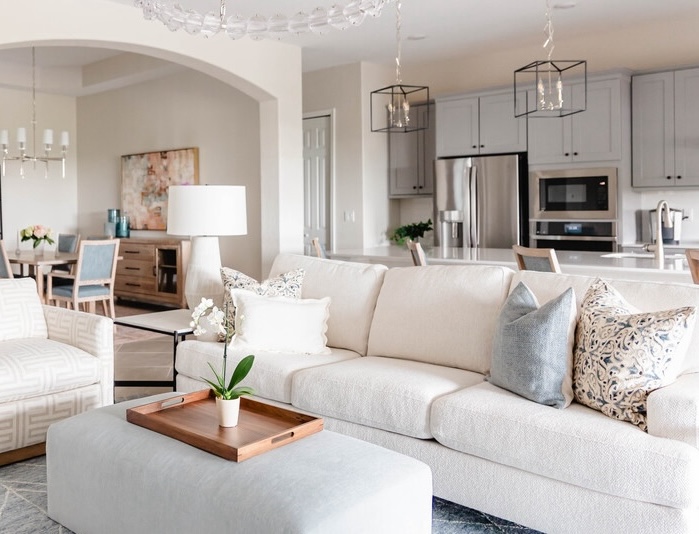
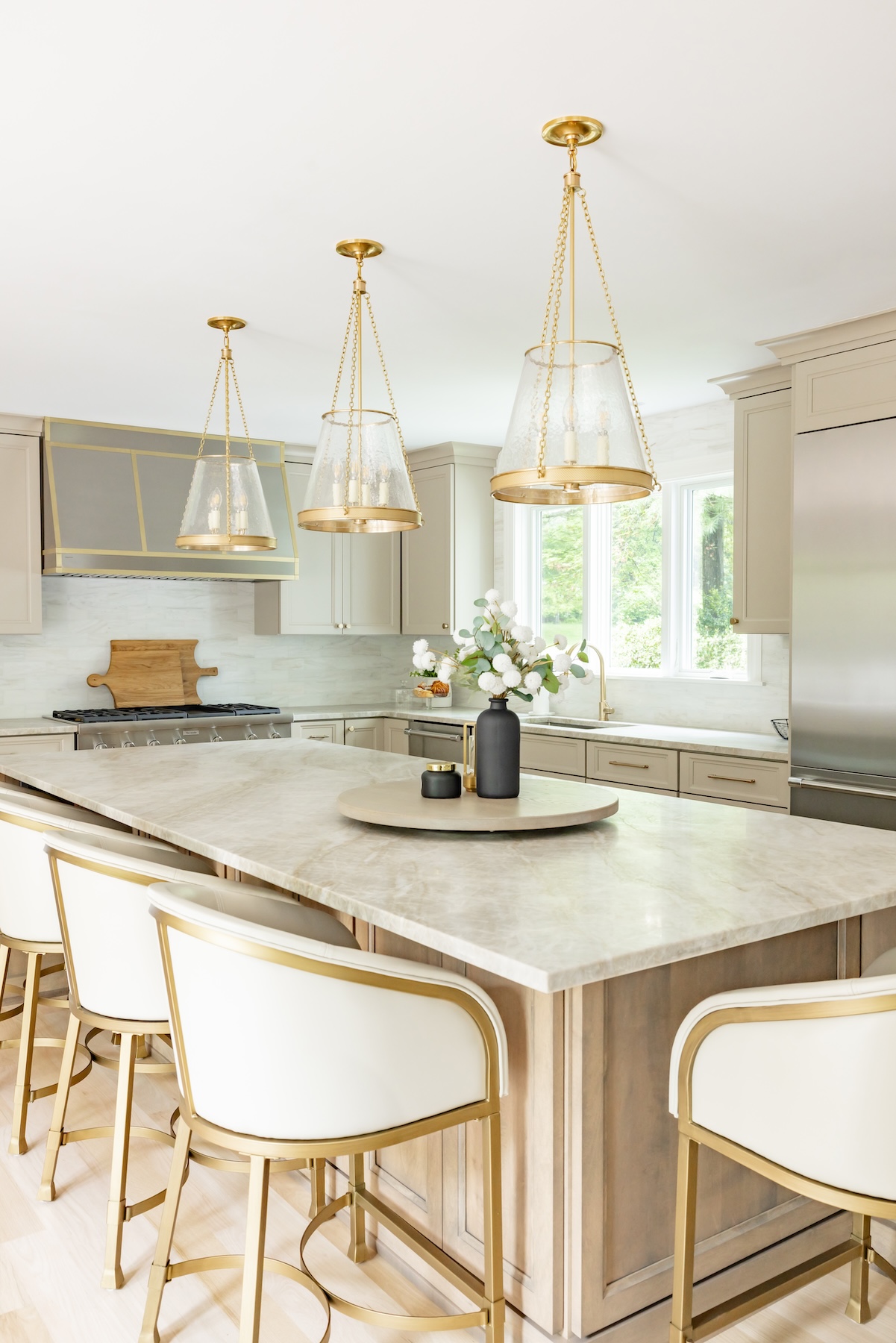
- February 23, 2026
- Rebecca Staub
Not every designer wants to come into your home and take down all the walls.
I know that might surprise you.
There’s this assumption that in order to create a truly custom home, the first step is demolition. Open it up. Move plumbing. Rework everything. And while a full renovation absolutely allows for complete customization, it can also open a can of worms — structurally, financially, and emotionally.
Sometimes, the most dramatic transformation doesn’t require dust in your hair or a dumpster in your driveway.
Sometimes, it requires thoughtful space planning, layered furnishings, and a designer eye.
Let’s talk about it.
The Case for Renovation

A renovation changes the bones of your home.
It’s structural. It’s permanent. It’s transformative in a way that only construction can be.
If your layout truly doesn’t function — if your kitchen is closed off, your bathroom lacks storage, or your home feels chopped up and inefficient — renovation can absolutely be the right move.
It allows you to:
- Reconfigure layouts
- Improve flow
- Increase natural light
- Add square footage
- Create architectural interest
When done intentionally, renovation can deliver a completely custom home designed around how your family lives.
But here’s what people don’t always talk about.
Renovations can quickly escalate in cost. Once walls come down, you may uncover electrical issues, plumbing upgrades, structural reinforcements — all of which eat into the budget you thought was going toward finishes.
They also require time. Permits. Contractors. Decisions under pressure.
And not every home actually needs that level of intervention.
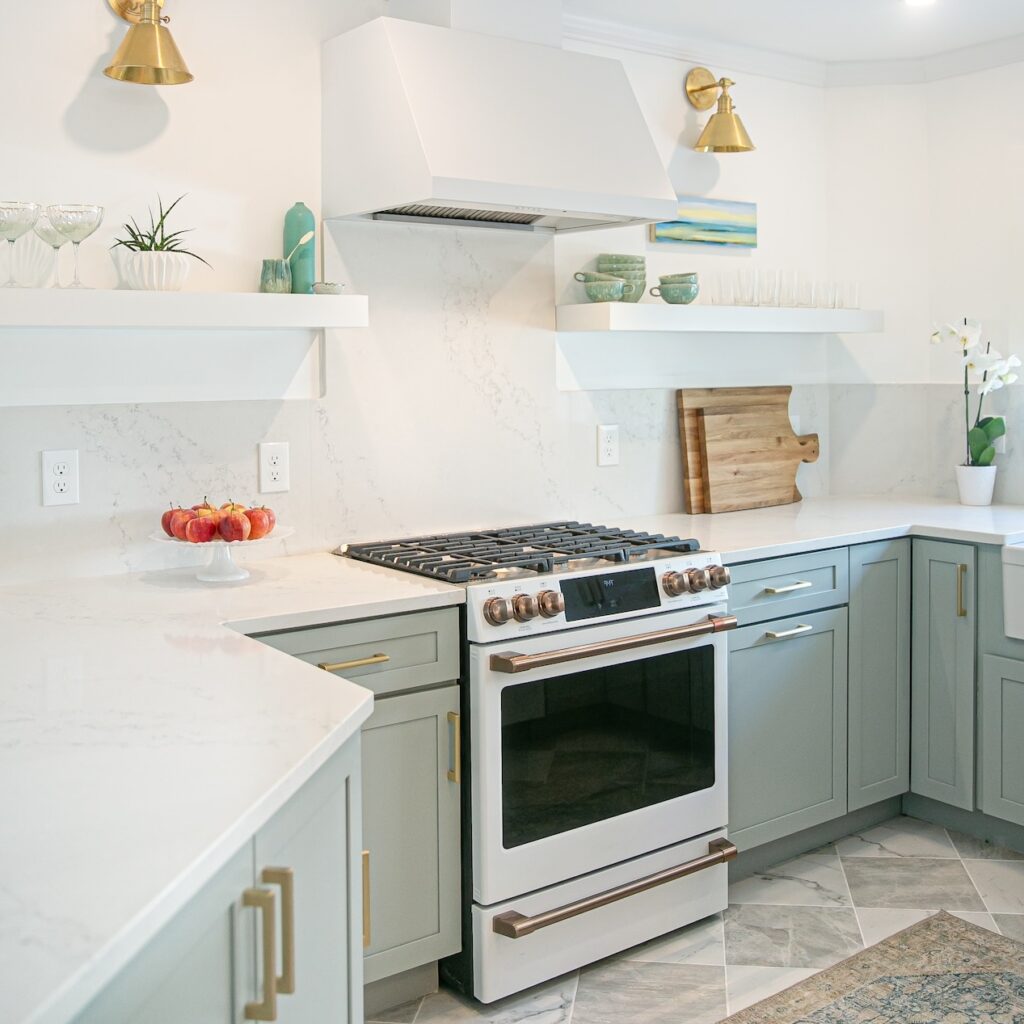
The Case for Furnishings (The Quiet Power Move)
Furnishings are underestimated.
But when done well? They are powerful.
Strategic furniture placement, custom upholstery, proper scale, layered lighting, wall coverings, and curated accessories can completely redefine how a space feels — without touching a single wall.
Thoughtful space planning alone can transform a room.
And space planning is where real design lives.
Before we ever talk about demolition, I look at:
- How the room is being used
- Traffic flow
- Sight lines
- Scale and proportion
- Opportunities for balance and symmetry
You would be amazed how often the “problem” isn’t the architecture — it’s the layout.
A sofa that’s too small.
Chairs that are floating.
Lighting that’s underscaled.
Rugs that don’t anchor the space.
These are design issues, not renovation issues.
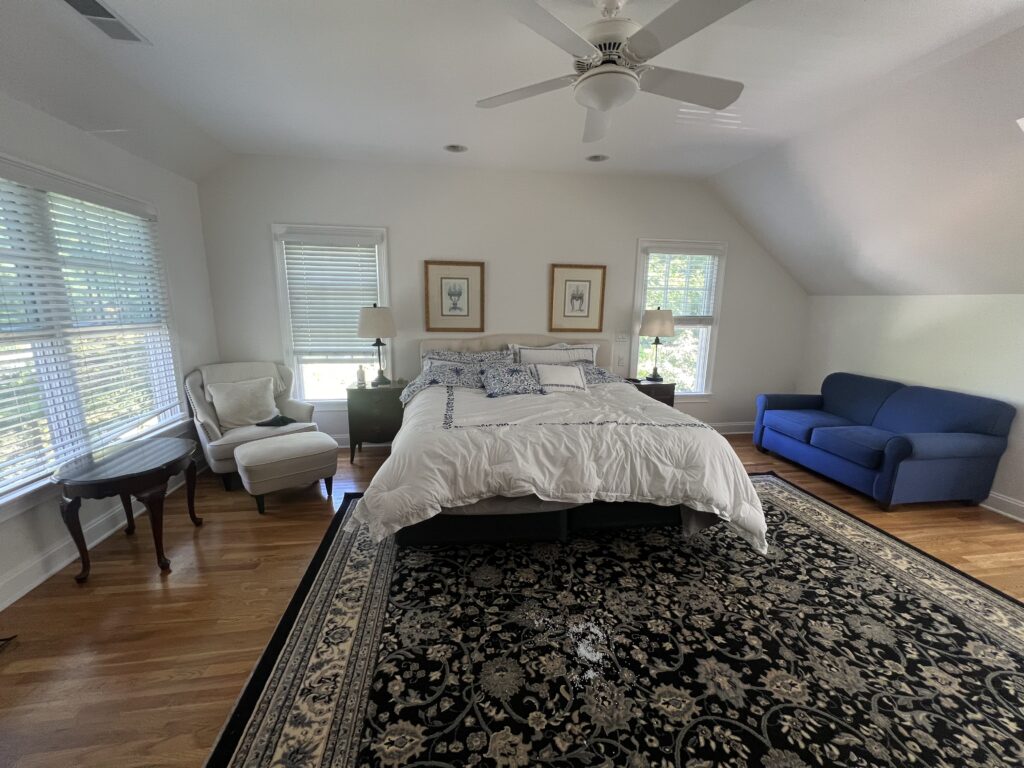
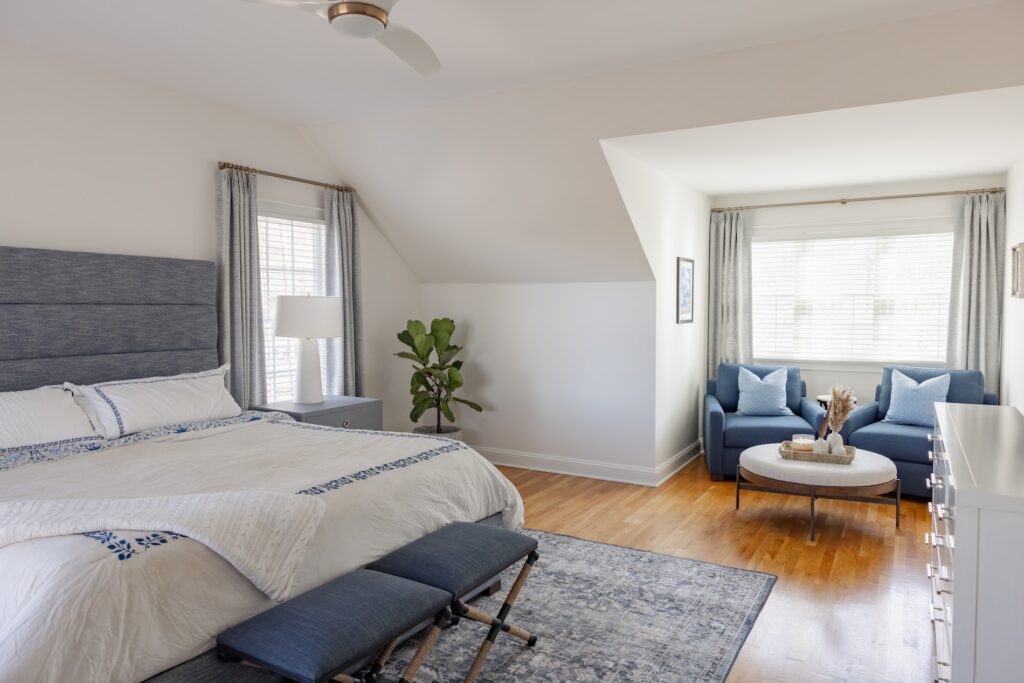
How Furnishings Create a Magazine-Worthy Home
You do not need to gut your home to make it feel custom.
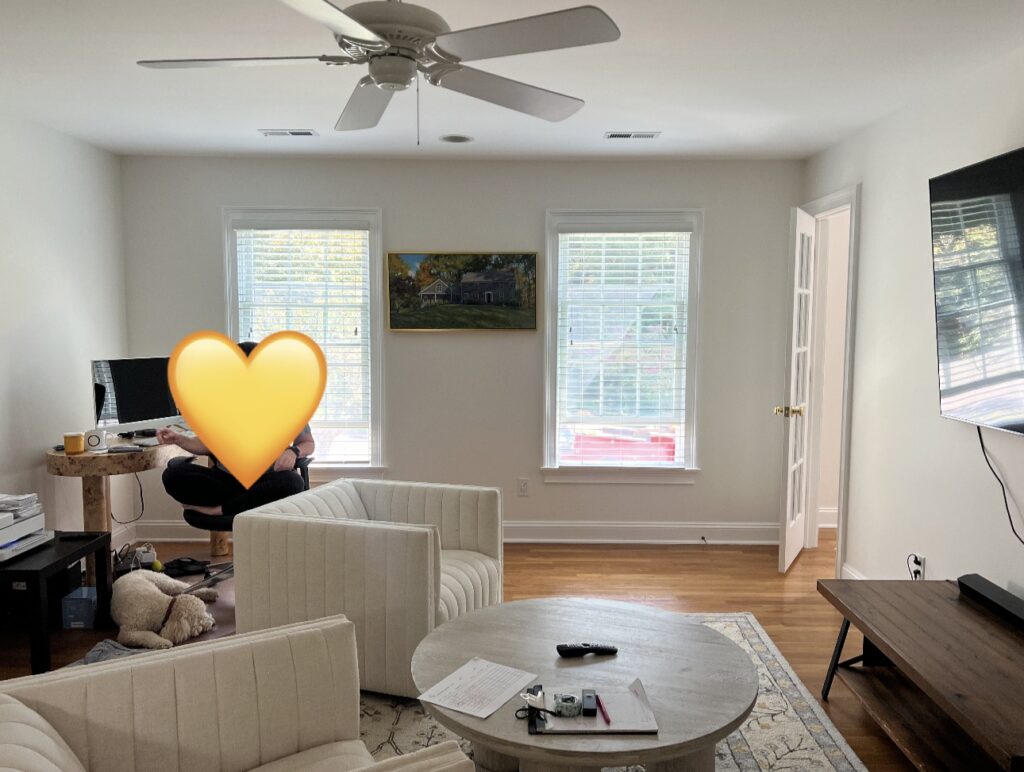
Here’s what truly elevates a space:
1. Proper Scale
Oversized art. Substantial lighting. Custom upholstery. Pieces that feel intentional rather than temporary.
2. Layered Lighting
Lighting is the jewelry of a room. Thoughtfully placed sconces, table lamps, and floor lamps instantly add dimension and warmth.
3. Custom Details
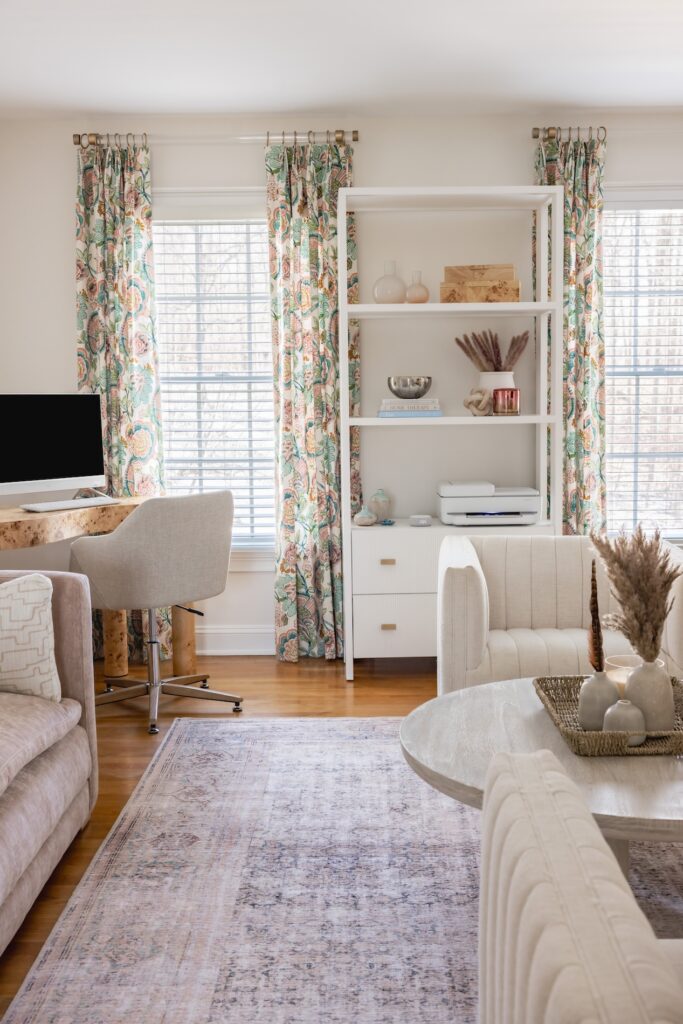
Roman shades, motorized drapery panels, tailored cushions — these details create refinement.
4. Wall Coverings & Texture
Wallpaper, grasscloth, panel molding, limewash — these treatments bring architectural depth without structural change.
5. Cohesive Color Palette
A curated palette that flows from room to room creates harmony and polish.
When furnishings are layered properly, a home can feel collected, timeless, and deeply personal — without a single permit being pulled.
When Renovation Is Worth It
There are absolutely times when renovation is the better investment:
- Your layout truly does not function
- You need additional storage or square footage
- Structural changes will significantly improve resale value
- You’re already planning major mechanical upgrades
If the foundation of the home is wrong, we fix it.
But if the bones are good?
We design around them.
The Smartest Question to Ask
nstead of asking:
“Should we renovate?”
Ask:
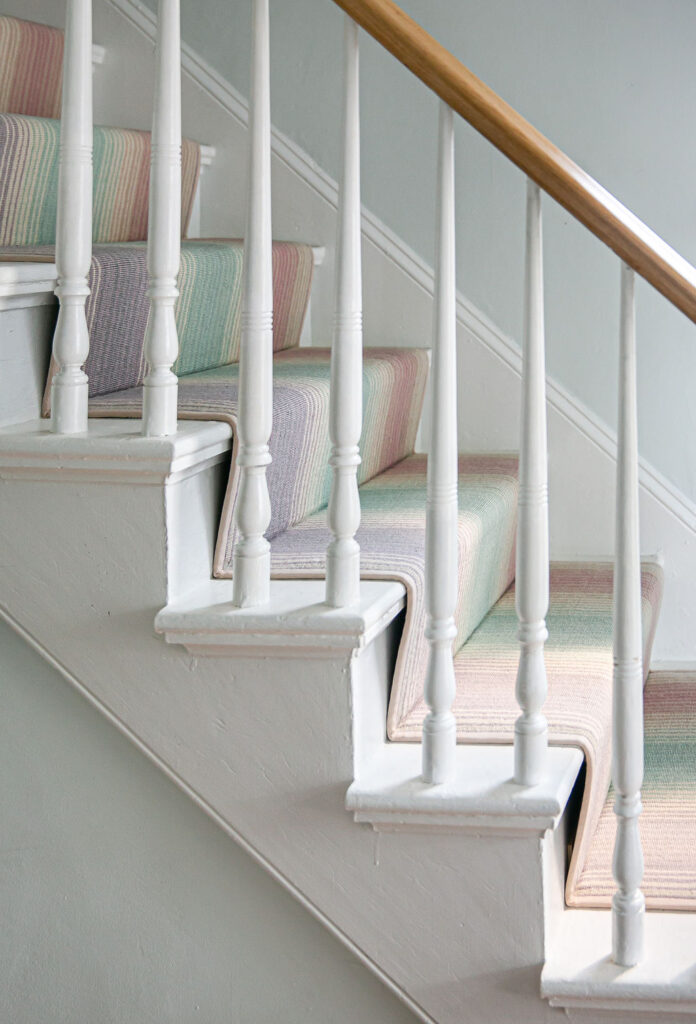
“Is the problem structural, or is it design?”
As an interior designer in Connecticut, I often walk into homes that have great bones but feel unfinished. With the right layout, furnishings, and thoughtful details, we can create a space that feels entirely new — without the disruption of a full renovation.
And here’s the truth:
A beautifully furnished home can feel just as transformative as a renovated one.
Sometimes more.
Because good design isn’t about tearing everything down.
It’s about seeing potential and knowing exactly how to bring it to life.
So… Which Will Transform Your Home More?
It depends on what’s truly missing.
If your home lacks function at a structural level, renovation may be the right path.
But if your home feels flat, disconnected, or unfinished — furnishings and strategic space planning may deliver the bigger return on investment.
Before you commit to demolition, it’s worth exploring what design can do first.
You might not need a sledgehammer.
You might just need a plan.

If you’re considering whether furnishings or renovation is right for your home, we’d love to guide you through that decision. At Beck Haus, we approach every project with intention — whether we’re reworking the bones or layering in the details.
Because magazine-worthy doesn’t have to mean messy.
Sometimes, it just means thoughtful.